30 Days / Juno
Aug 28 – Sep 27, 2025
Day 1 was boids. Three rules: separation, alignment, cohesion. That wasn't an introduction to the experiment. That was the reason for it.
One piece per night for 30 days, built in Juno -- Transient Labs' AI-assisted coding tool for p5.js and Three.js. The work moved through emergence, art history, glitch, time-aware pieces, particle physics. False starts, deleted projects, half-finished ideas. At the end: I wasn't sure I had 30 ideas in me. Turns out, I did.
homage

Rothko ask "how much can you remove and still feel something?" Glitch does the same.
Rothko ask "how much can you remove and still feel something?" Glitch does the same.
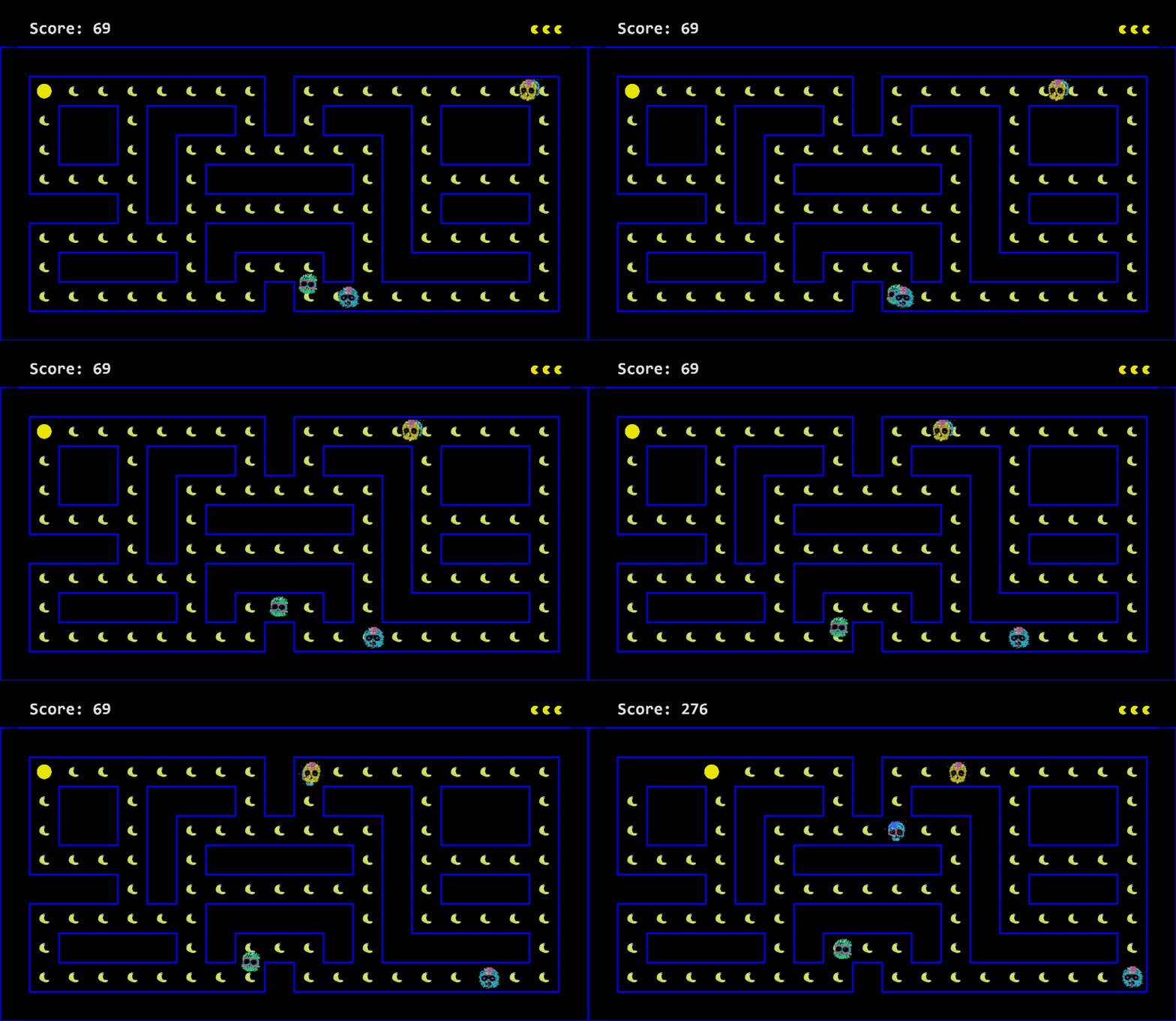
XCOPY's Grifters substitute for Blinky, Pinky, Inky and Clyde in this vibe-coded version of Pac-Man.
XCOPY's Grifters substitute for Blinky, Pinky, Inky and Clyde in this vibe-coded version of Pac-Man.
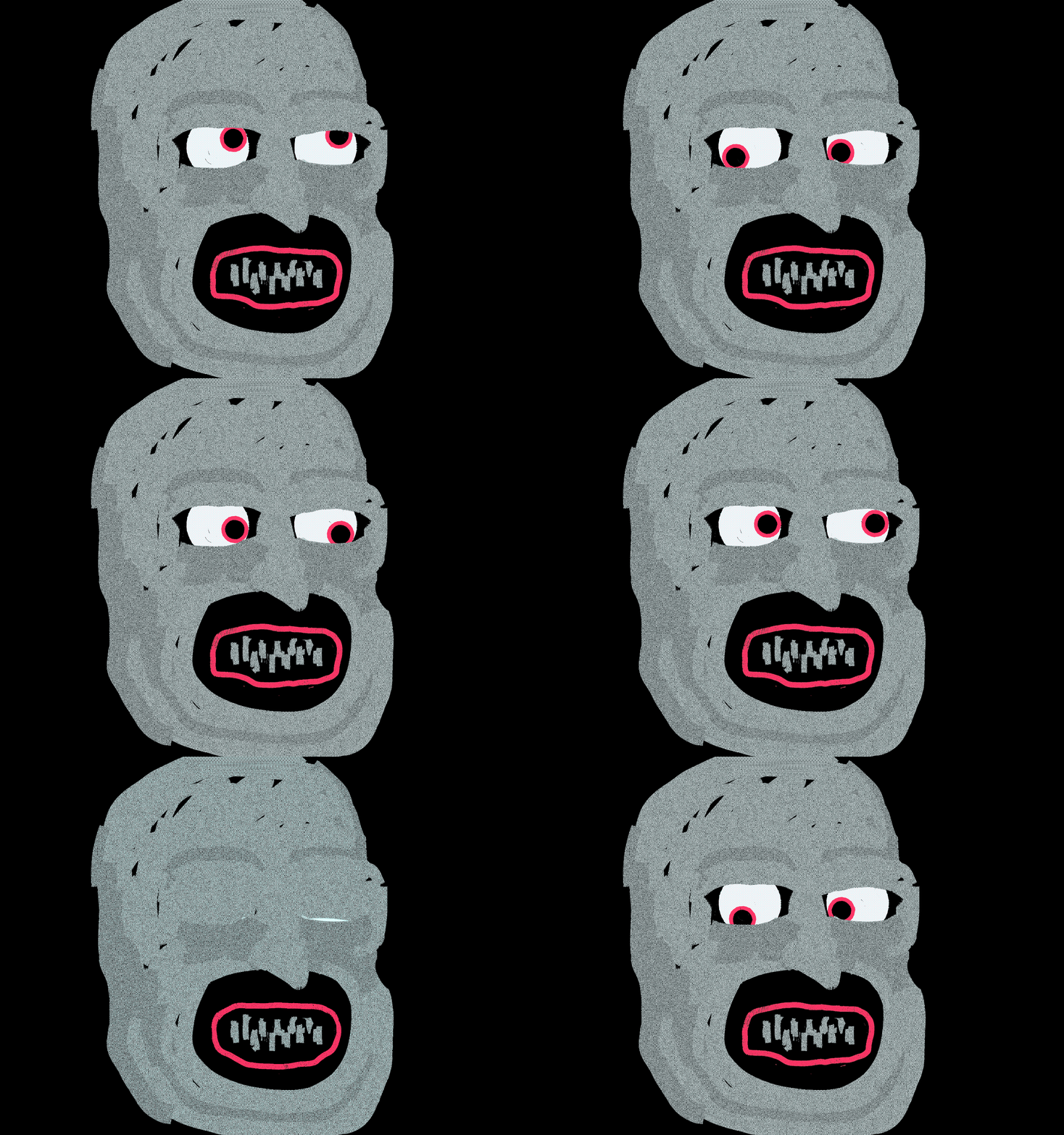
XCOPY's EYE-ROLLA remixed with user interaction: the eyes track your mouse or finger, a click makes him blink.
XCOPY's EYE-ROLLA remixed with user interaction: the eyes track your mouse or finger, a click makes him blink.
XCOPY's Right-click and Save As Guy wrapped in javascript - you literally cannot right-click and save.
XCOPY's Right-click and Save As Guy wrapped in javascript - you literally cannot right-click and save.
ACK spent two years and three months building a physical grand piano with a skull for a body, the FrankenSteinway. It debuted at an exhibit in September 2025, right in the middle of this experiment. This version exists only in cyberspace and is playable in your browser.
ACK spent two years and three months building a physical grand piano with a skull for a body, the FrankenSteinway. It debuted at an exhibit in September 2025, right in the middle of this experiment. This version exists only in cyberspace and is playable in your browser.
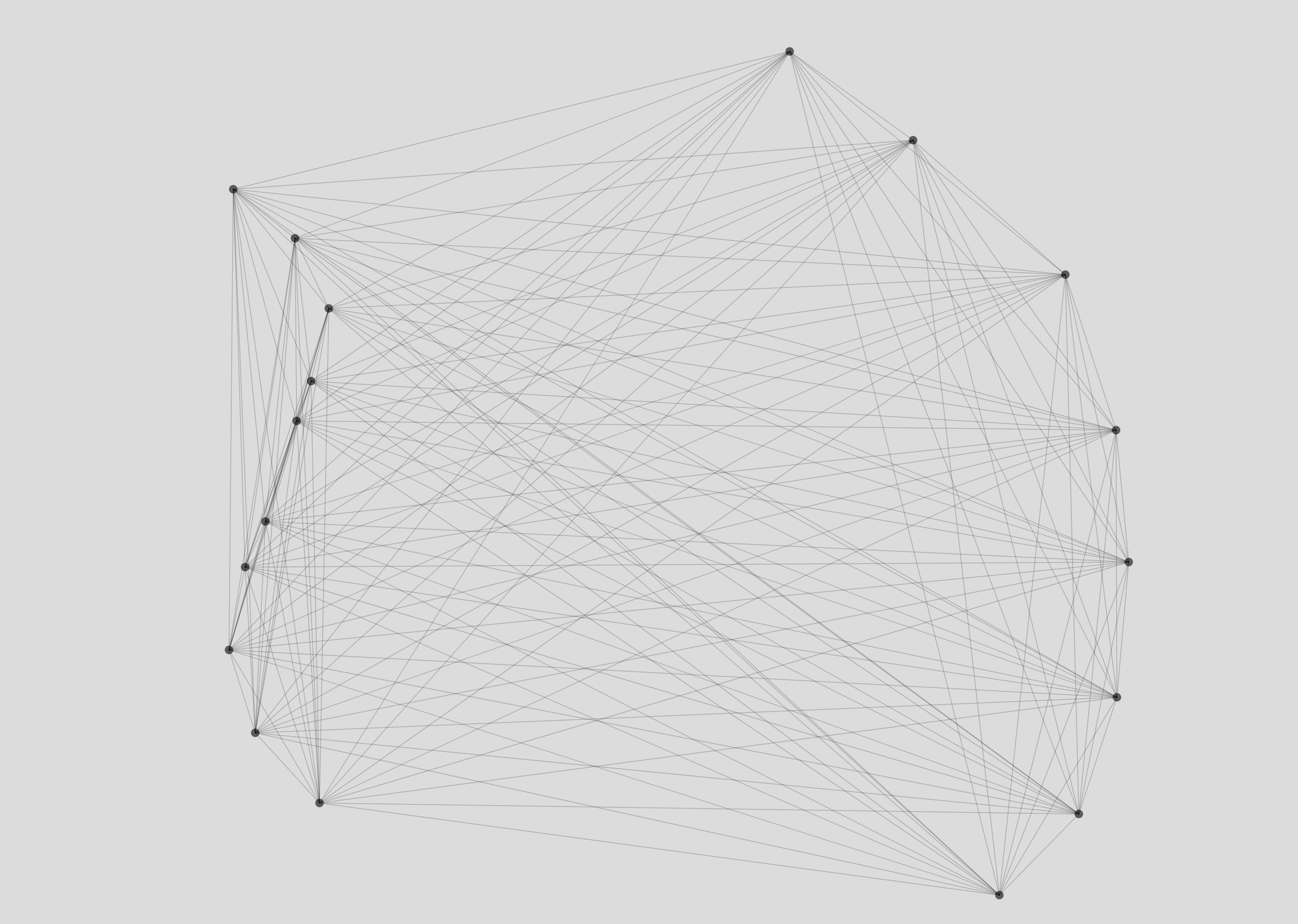
Looking for inspiration on generative art, I stumbled across Sol LeWitt: a prompt engineer before prompt engineering was a thing. he wrote instructions; others executed. i wrote prompts; Juno executed.
Looking for inspiration on generative art, I stumbled across Sol LeWitt: a prompt engineer before prompt engineering was a thing. he wrote instructions; others executed. i wrote prompts; Juno executed.
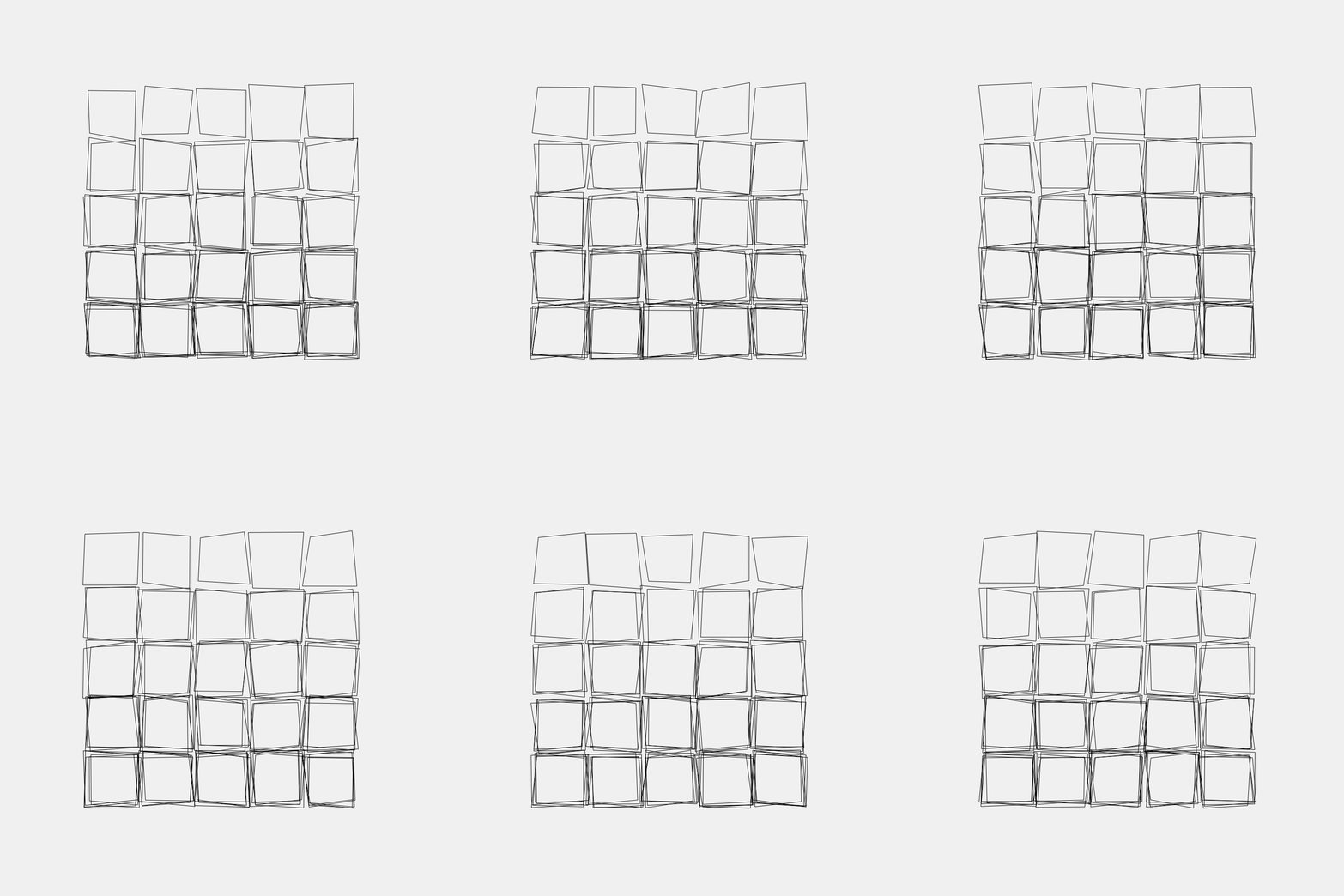
Vera Molnar was making recursive, rule-based drawings on early computers in the 1960s. #remixeverything.
Vera Molnar was making recursive, rule-based drawings on early computers in the 1960s. #remixeverything.
emergence
boids is a system composed of three simple rules: separation, alignment, and cohesion. yet it can exhibit stunningly complex patterns. that's what made it the natural starting point.
boids is a system composed of three simple rules: separation, alignment, and cohesion. yet it can exhibit stunningly complex patterns. that's what made it the natural starting point.
fluid simulation. metaball physics, slow collision, constant motion. nothing resolves.
fluid simulation. metaball physics, slow collision, constant motion. nothing resolves.
three bodies, mutual gravitational pull, no closed-form solution. the orbits are deterministic but unpredictable past a certain horizon. i made it to watch the chaos.
three bodies, mutual gravitational pull, no closed-form solution. the orbits are deterministic but unpredictable past a certain horizon. i made it to watch the chaos.
Conway's Game of Life mapped onto a Mobius strip and onto a sphere. the rules don't change. the topology does. life running on a strange surface is strange life.
Conway's Game of Life mapped onto a Mobius strip and onto a sphere. the rules don't change. the topology does. life running on a strange surface is strange life.
Conway's Game of Life mapped onto a Mobius strip and onto a sphere. the rules don't change. the topology does. life running on a strange surface is strange life.
Conway's Game of Life mapped onto a Mobius strip and onto a sphere. the rules don't change. the topology does. life running on a strange surface is strange life.
boids again, this time built after the look of a starling murmuration. turned out to be the most remixed piece of the whole experiment. four remixes. something about the movement landed.
boids again, this time built after the look of a starling murmuration. turned out to be the most remixed piece of the whole experiment. four remixes. something about the movement landed.
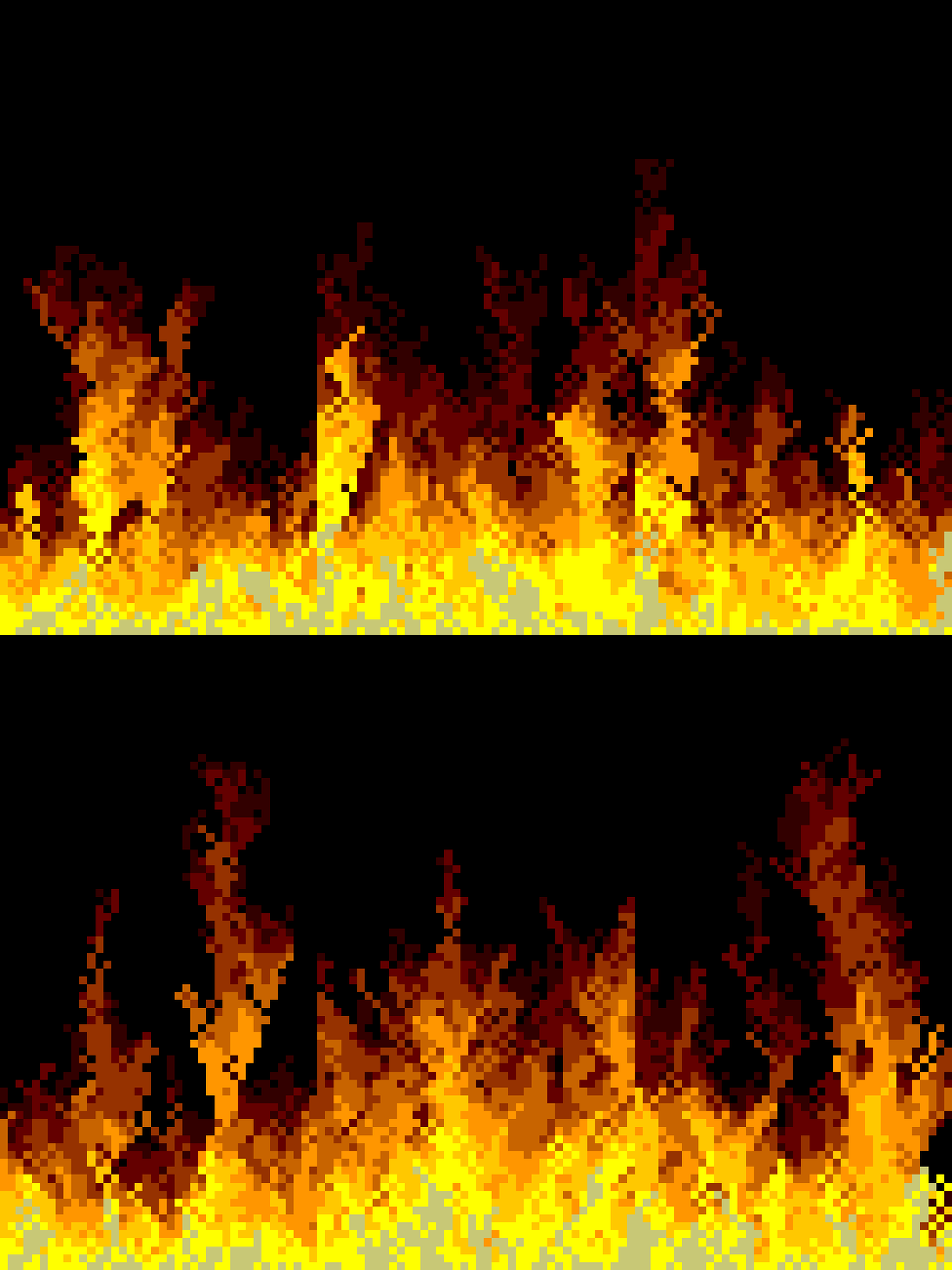
cellular automaton: each pixel checks its neighbors and decides whether to burn. the emergent result looks like fire even though no pixel knows what fire is.
cellular automaton: each pixel checks its neighbors and decides whether to burn. the emergent result looks like fire even though no pixel knows what fire is.
Game of Life with particle physics layered on top. the combination shouldn't work as well as it does.
Game of Life with particle physics layered on top. the combination shouldn't work as well as it does.
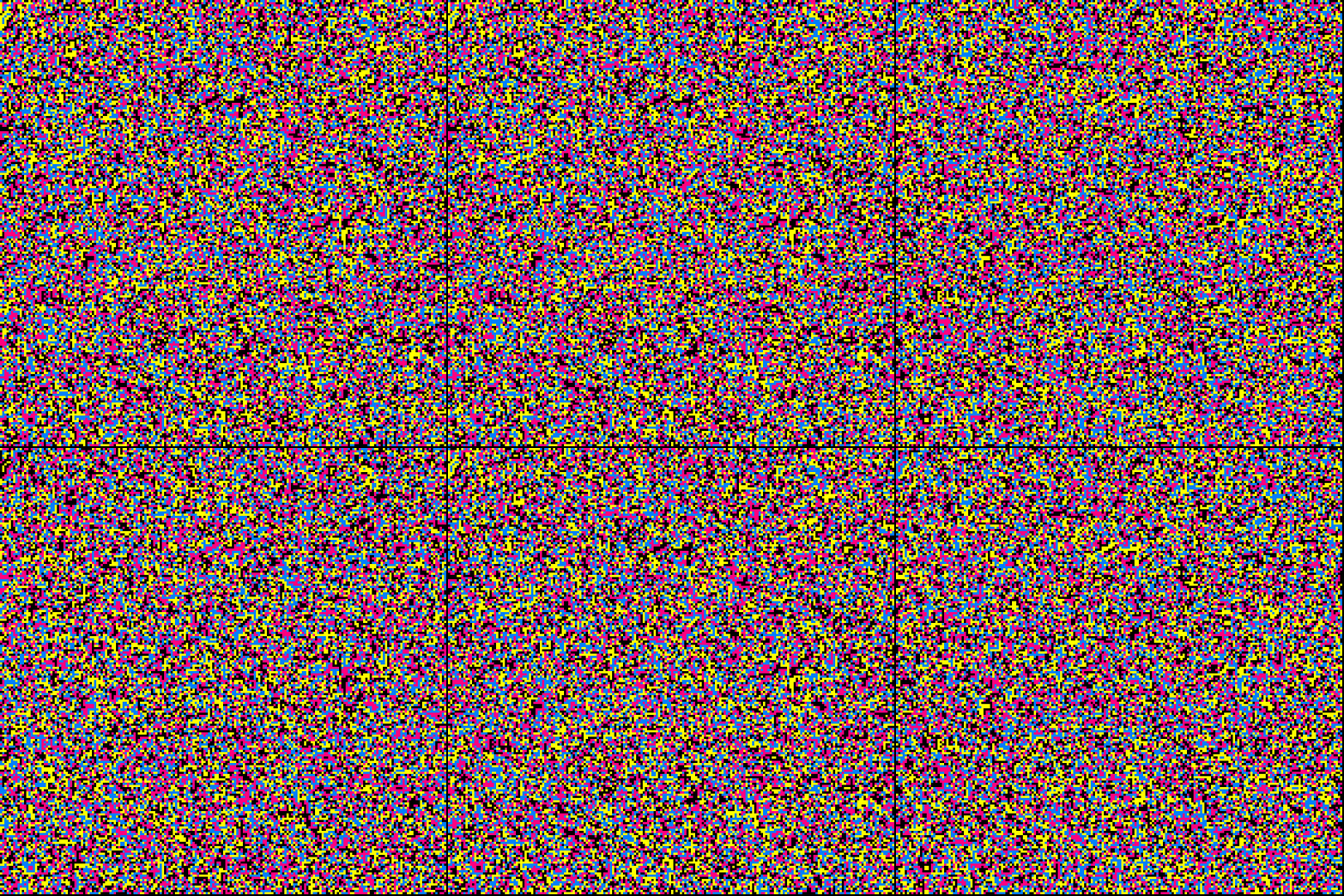
cellular automata. cell cycles through states. the patterns that emerge look like bacteria competing for territory. inspired by Patrick Amadon's noise project.
cellular automata. cell cycles through states. the patterns that emerge look like bacteria competing for territory. inspired by Patrick Amadon's noise project.
glitch + tools
Breath of the Wild style grass in Juno, glitching and swaying in the wind.
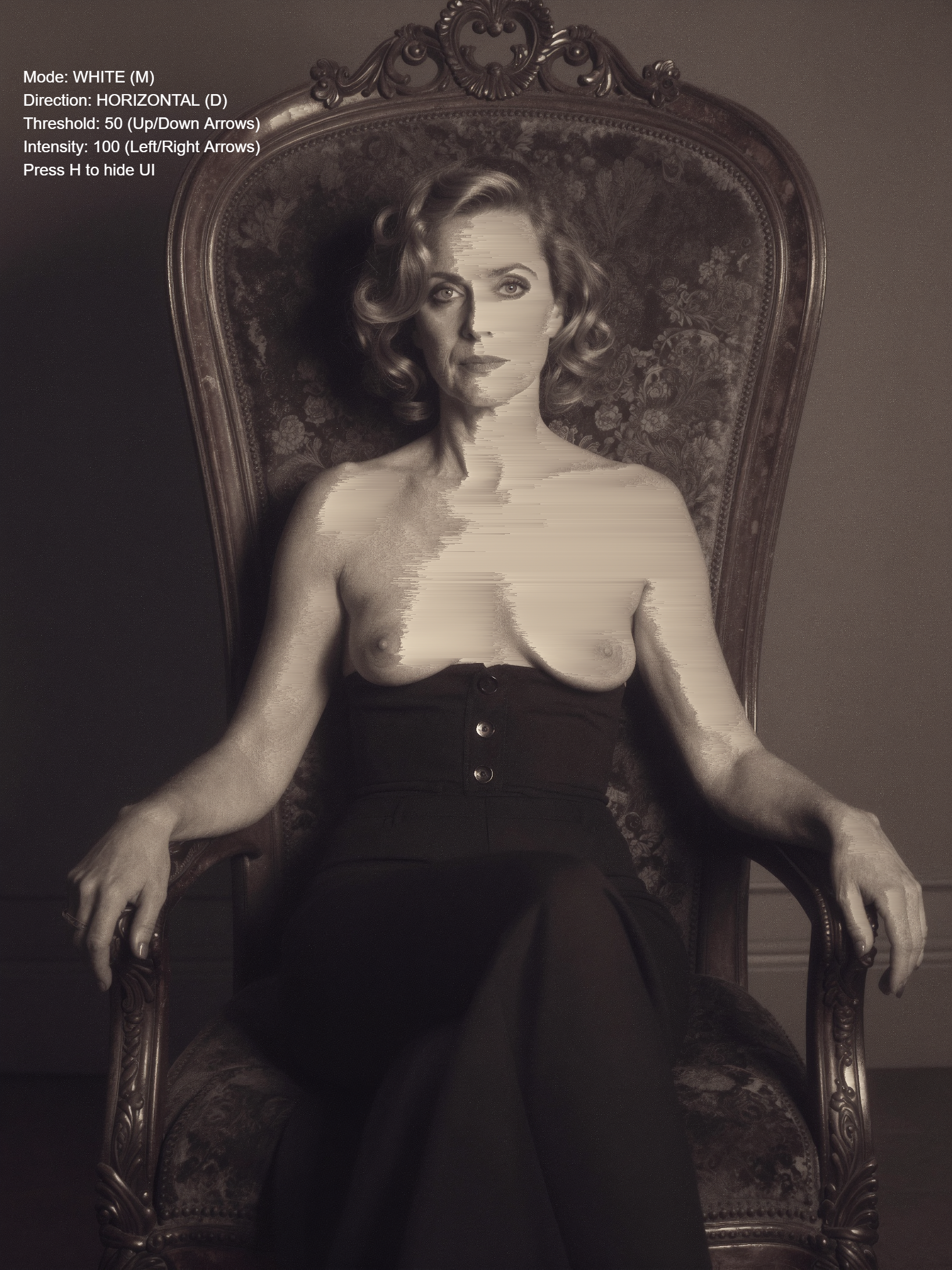
I've always loved pixel sorting but determining where to start and stop has always been a mystery to me. Some quick googling turned up ASDF pixel sort by Kim Asendorf. I have no idea why it's called ASDF.
I've always loved pixel sorting but determining where to start and stop has always been a mystery to me. Some quick googling turned up ASDF pixel sort by Kim Asendorf. I have no idea why it's called ASDF.
Organic physics applied to the Mona Lisa. Every pixel pulled by a different force. The face holds together longer than it should.
Organic physics applied to the Mona Lisa. Every pixel pulled by a different force. The face holds together longer than it should.
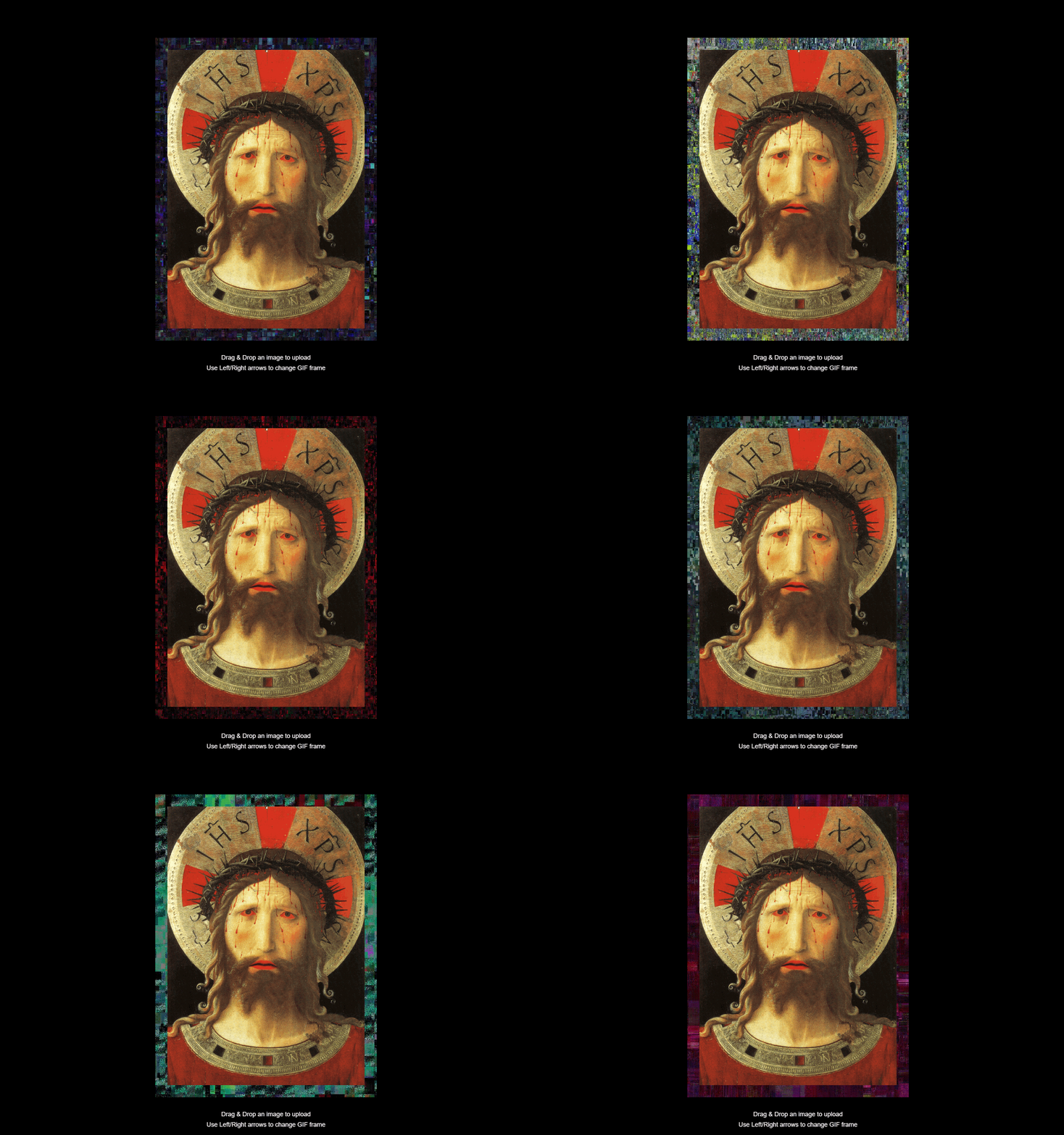
Drag-and-drop frame for your digital art using cc0 glitch textures created by Patrick Amadon.
Drag-and-drop frame for your digital art using cc0 glitch textures created by Patrick Amadon.
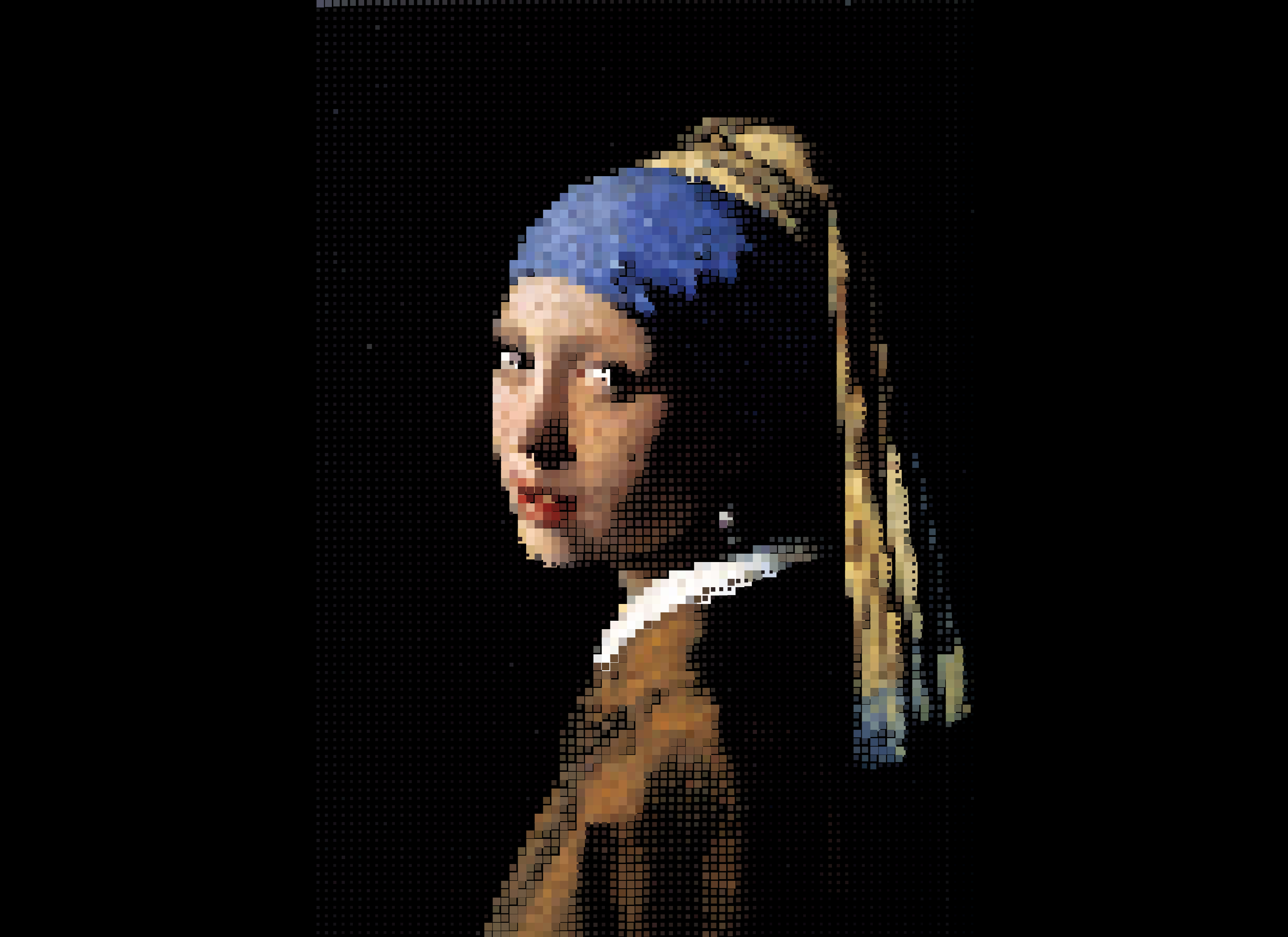
Image pixelization using brightness-based pixel sizing to create a unique effect.
Image pixelization using brightness-based pixel sizing to create a unique effect.
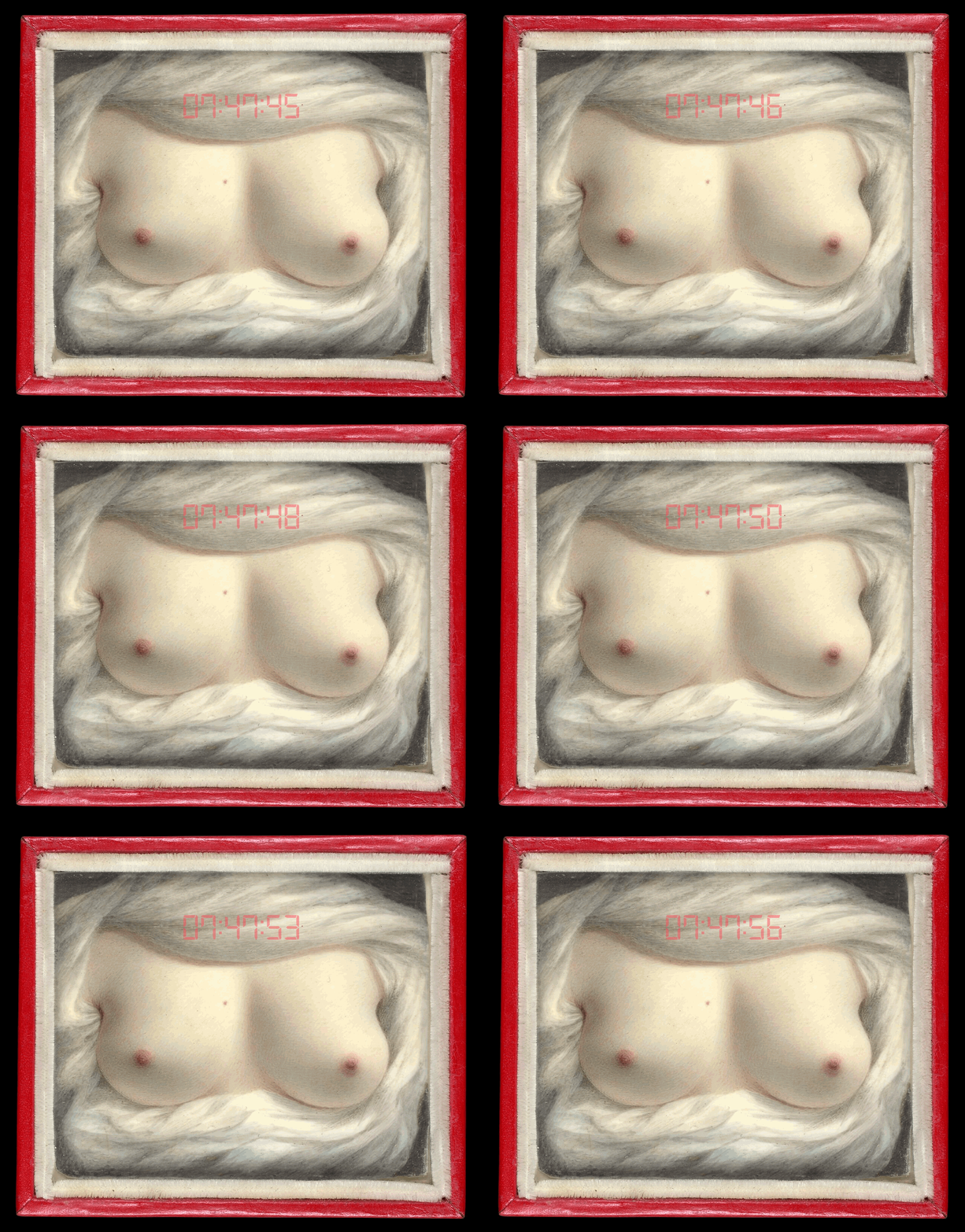
Ben Strauss inspired this idea: turning art into time pieces. Drag-and-drop any image and the recipe overlays an LCD-style clock showing the current time.
Ben Strauss inspired this idea: turning art into time pieces. Drag-and-drop any image and the recipe overlays an LCD-style clock showing the current time.
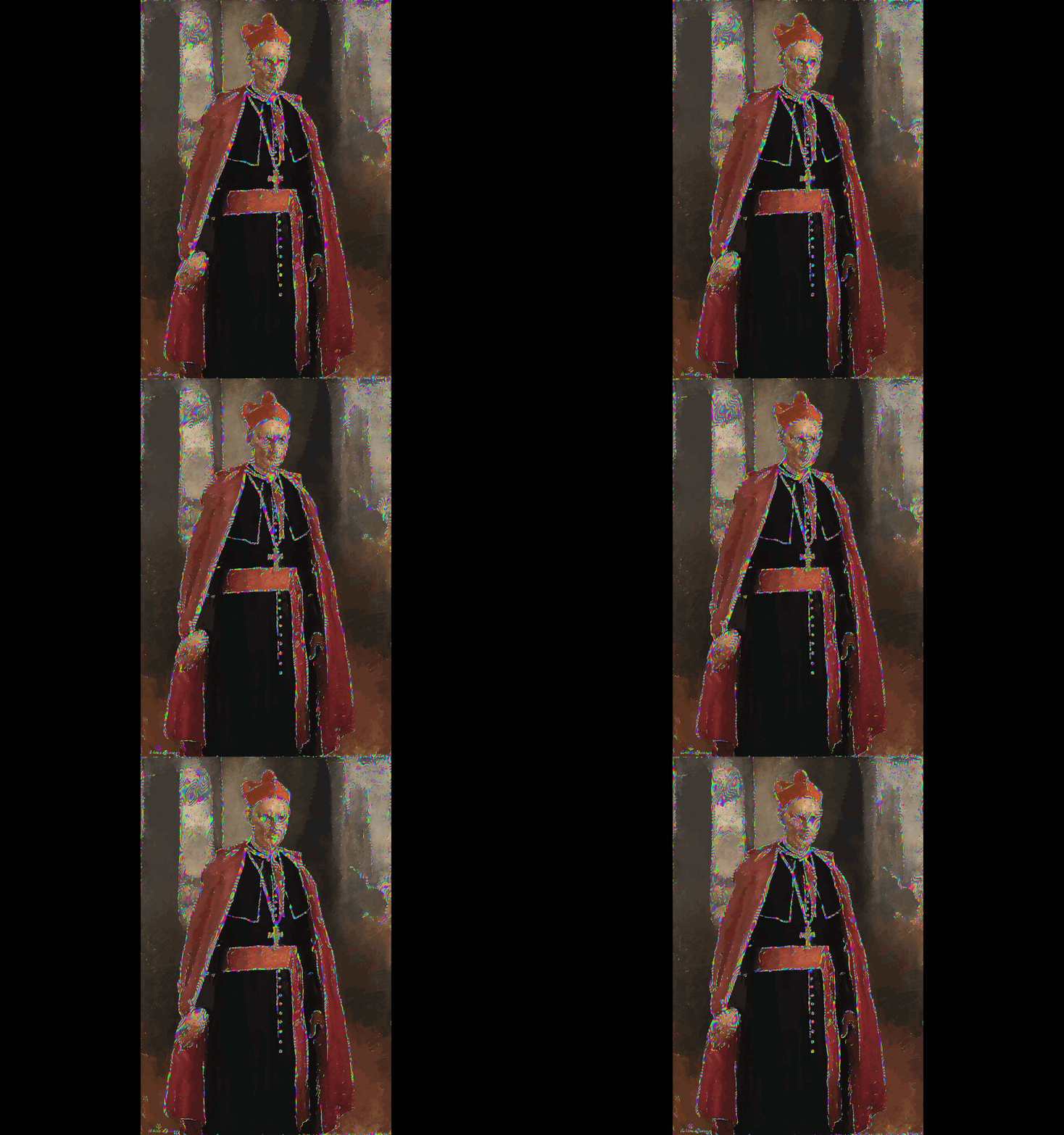
My daughter is taking art and came home excited about contour drawing: finding the edges of a form without lifting your pencil. This was this inspiration.
My daughter is taking art and came home excited about contour drawing: finding the edges of a form without lifting your pencil. This was this inspiration.
Drag-and-drop your art. Particle physics pulls it apart: each pixel becomes an agent with velocity and mass. Let it drift away.
Drag-and-drop your art. Particle physics pulls it apart: each pixel becomes an agent with velocity and mass. Let it drift away.
i had a lot of fun the last 30 nights. i wasn't sure i had 30 ideas in me. turns out, i did. there were a lot of false starts, half-finished ideas, failed attempts and deleted projects. here's what made it through.
open thread →